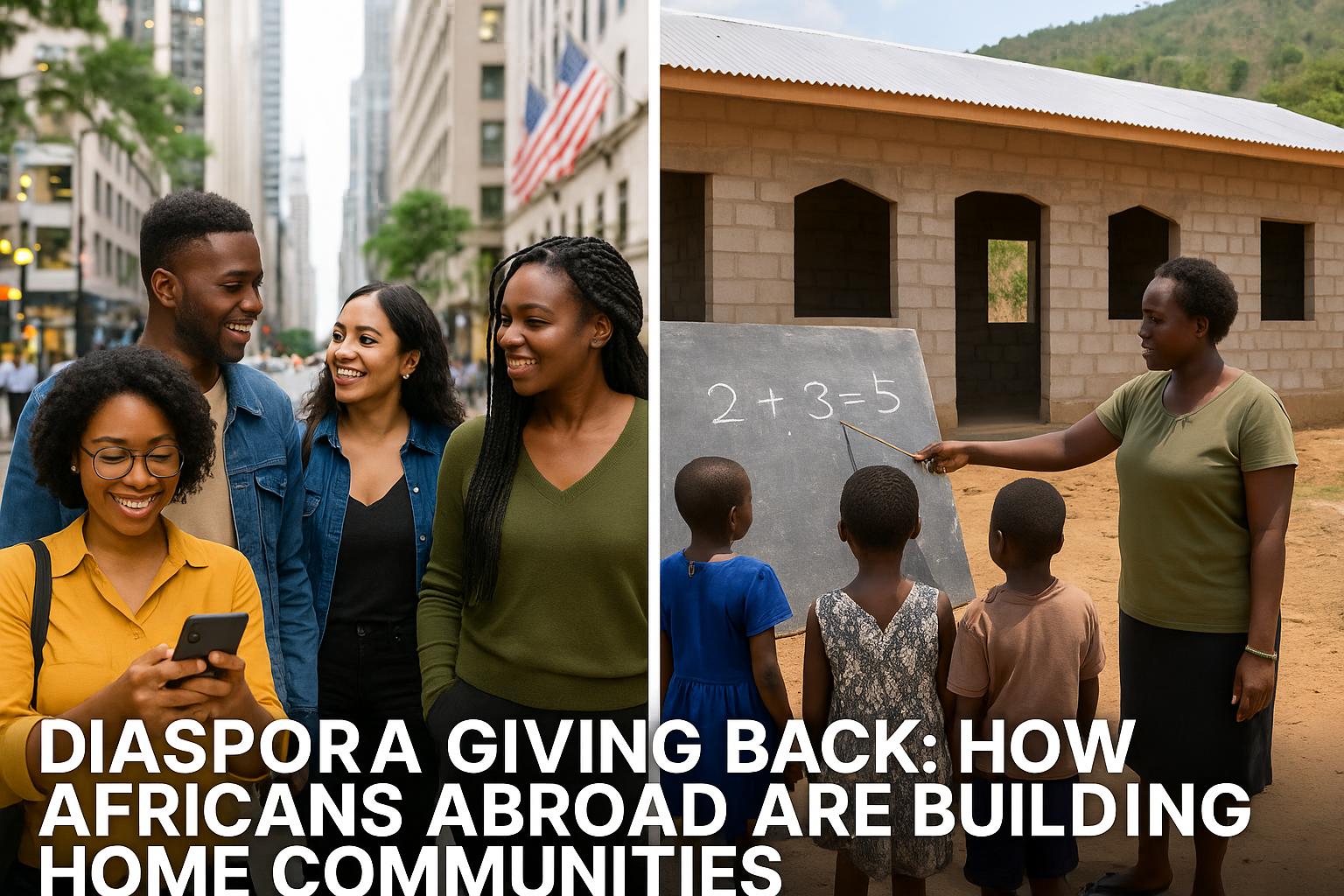






African Students in Europe Driving Tech Innovation


Introduction
Across European capitals, a quiet revolution is unfolding. From Berlin’s coding bootcamps to London’s artificial intelligence labs, African students are emerging as some of the most promising voices in technology and innovation. They are not only excelling in classrooms but also founding startups, publishing research, and winning global awards. Their stories reveal a new chapter in Africa’s relationship with the world — one where knowledge, creativity, and resilience are shaping the continent’s digital future.
This surge in innovation among African students abroad reflects what scholars call “brain circulation” rather than brain drain. Instead of leaving permanently, many of these students envision returning home to scale their ideas, strengthen ecosystems, and uplift communities. The diaspora is no longer simply a group of Africans living overseas; it has become a living bridge connecting continents, resources, and visions.
Stories of Innovation
A Fintech Breakthrough in the U.K.
One inspiring example is Chidi Nwankwo, a Nigerian master’s student in computer science at King’s College London. Frustrated by the difficulties his parents faced when sending money home, he created a fintech app that simplifies cross-border remittances and cuts fees by nearly 40%.
The app quickly gained traction within diaspora communities across the U.K. and was recognized by Barclays’ Eagle Labs as one of the top student-led innovations of the year. Investors are now eyeing the product for scaling into West Africa, where millions remain underbanked but digitally connected through smartphones.
Renewable Energy from Paris to Ghana
In Paris, Ama Boateng, a Ghanaian PhD student in renewable energy systems, is rethinking how African villages can achieve energy independence. Her project combines solar microgrids with AI-powered monitoring systems to balance supply and demand. The solution not only won her a French national innovation award but also secured a pilot partnership with the Ghanaian Ministry of Energy.
For Boateng, the journey is personal: “I want every child in rural Ghana to study at night without relying on kerosene lamps. If Europe gave me the tools, Africa will give me the purpose,” she explained during a recent panel in Lyon.
Berlin’s Coding Bootcamps
Berlin has become a hotspot for African students interested in software development. Programs like Le Wagon and 42 Berlin have welcomed hundreds of Africans over the past five years. Many of these students are building apps for logistics, e-commerce, and digital agriculture.
A notable case is Samuel Adeyemi, a Nigerian who joined a Berlin bootcamp and later co-founded a platform that helps small African farmers sell directly to European markets. By cutting out middlemen, his startup increases farmers’ profits by 25–30%.
The Bigger Picture: Brain Circulation
For decades, African policymakers worried about the “brain drain” — the loss of talented students who left for studies abroad and never returned. Today, however, a new pattern is emerging. Many African students abroad maintain strong ties with their home countries, often working on projects designed for African contexts even while studying in Europe.
This “brain circulation” has several dimensions:
– Knowledge Transfer: Skills learned in European labs are applied directly to African problems.
– Networks: Diaspora students often connect African startups to European investors and accelerators.
– Mentorship: Many return to their home countries during summer breaks to run workshops and coding camps.
– Policy Impact: Alumni influence government policy by advising on digital economy strategies.
Rather than losing talent forever, Africa is gaining a more skilled, more globally connected generation.
Challenges Along the Way
While the success stories are inspiring, challenges remain.
1. Funding Gaps: African students abroad often struggle to secure funding for ideas targeted at African markets, as European investors may see them as “too risky.”
2. Visas & Bureaucracy: Many students face visa restrictions that make it difficult to start businesses while still studying.
3. Scaling Home: Returning home with technology solutions requires navigating Africa’s tough infrastructure gaps, from inconsistent electricity to internet costs.
4. Representation: Some students report discrimination or underestimation in European tech spaces, meaning they must work twice as hard to gain recognition.
Despite these challenges, resilience has become the hallmark of African student innovators.
The Role of Diaspora Networks
Across Europe, diaspora organizations are stepping in to create support structures. For example:
– African-German Entrepreneurs Network (AGEN) in Berlin hosts pitch nights for African founders.
– UK-Nigeria Tech Hub, supported by the British government, connects Nigerian students in the U.K. with resources and mentorship.
– France Afrique Innovation Forum provides grants for African students with solutions targeting development challenges.
These networks are more than social gatherings; they are incubators of opportunity, creating a sense of belonging and purpose.
Long-Term Impact for Africa
The innovations being built by African students in Europe are already influencing economic development back home. Consider the following impacts:
– Fintech: Mobile payments and remittance solutions are reducing costs for African families.
– Healthtech: Apps built abroad are improving maternal care and rural diagnostics in African hospitals.
– Edtech: Online platforms designed in Europe are giving African students access to affordable digital skills.
– Green Tech: Renewable energy projects are tackling both climate change and Africa’s electricity deficits.
If scaled properly, these solutions could contribute billions to Africa’s GDP over the next decade while improving quality of life for millions.
Chrome News Perspective
At Chrome News, we view the story of African students in Europe as more than academic success. It is about agency, hope, and the redefinition of Africa’s future. For too long, Africa’s diaspora was seen primarily as a source of remittances. Now, it is increasingly a source of innovation capital — ideas, startups, and global partnerships that flow back into the continent.
These young students are Africa’s ambassadors of possibility. They prove that global exposure does not dilute African identity; rather, it strengthens it. By applying European resources to African problems, they embody a spirit of global citizenship with African roots.
Most importantly, their work sends a message to the next generation: leaving home to study abroad is not the end of the story, but the beginning of a cycle of contribution. Whether through fintech apps, renewable energy grids, or AI-powered solutions, African students in Europe are laying bricks for a future where Africa is not just a consumer of technology but a global leader in digital innovation.
Conclusion
The journey of African students across Europe reveals a continent in transformation. From classrooms in Berlin to startup competitions in Paris, they are rewriting Africa’s narrative — one innovation at a time. While challenges persist, their resilience, creativity, and connection to their roots are undeniable.
As these students graduate, launch startups, and return home, Africa stands to benefit from a generation that is globally trained but locally committed. They are not just chasing careers; they are pursuing impact.
In their success, we see the blueprint of Africa’s technological rise: driven by youth, powered by diaspora, and connected to the world.