




How to Cook Jollof Rice (Africa’s Pride)

Few dishes in Africa spark as much passion, rivalry, and cultural pride as Jollof rice. More than just food, Jollof has become a symbol of identity across West Africa, celebrated at weddings, birthdays, holidays, and even in heated debates between Nigeria and Ghana. For Africans at home and in the diaspora, Jollof rice is more than a meal — it’s a story of history, pride, and togetherness.
A Short History of Jollof Rice
Jollof rice traces its roots to the Senegambian region, where the Wolof people prepared a dish called thieboudienne — rice cooked with fish, vegetables, and tomatoes. Over time, the recipe spread across West Africa, adapting to local tastes and ingredients.
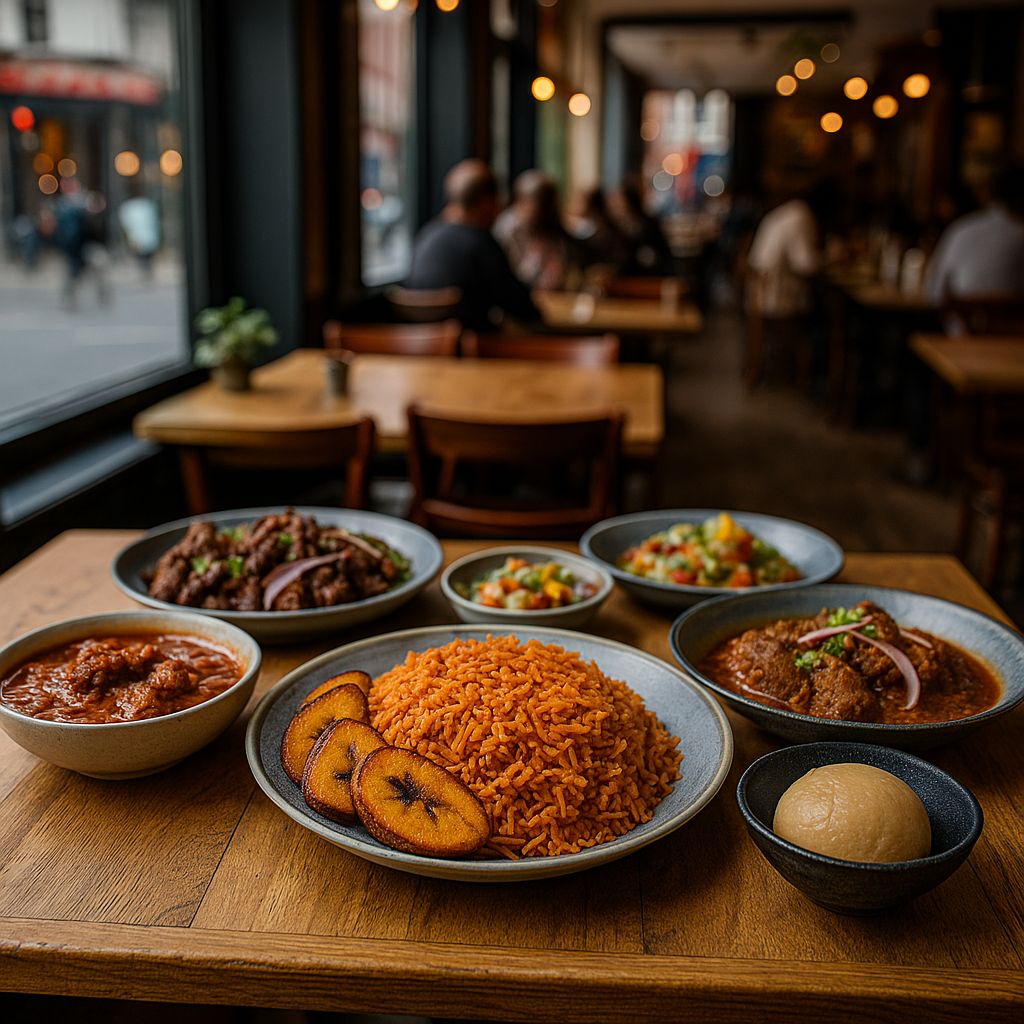
In Nigeria, cooks swapped fish for beef, chicken, or goat meat and paired the rice with fried plantain and salad. In Ghana, chefs emphasized fragrant spices and basmati rice. Today, the “Jollof Wars” between Nigeria and Ghana are legendary, with each side claiming their version is the best.
But beyond the rivalry, Jollof remains a unifying dish. At African gatherings abroad, the first question is often: “Who made the Jollof?”
Ingredients for Nigerian Jollof Rice
To cook authentic Nigerian Jollof rice for six people, you’ll need:
– 4 cups of long-grain parboiled rice
– 1/2 cup vegetable oil
– 2 red bell peppers
– 4 medium tomatoes
– 1 medium onion (divided in two)
– 2 scotch bonnet peppers (for spice lovers)
– 3 tablespoons tomato paste
– 4 cups chicken stock (or water, with seasoning cubes)
– 2 teaspoons thyme
– 2 teaspoons curry powder
– 2 bay leaves
– Salt to taste
– Knorr or Maggi seasoning cubes (2–3)
Optional sides: fried plantain, grilled chicken, coleslaw, or moi-moi (bean pudding).
Step-by-Step Preparation
1. Blend the Base Sauce: Blend red bell peppers, tomatoes, half the onion, and scotch bonnet peppers into a smooth paste.
2. Fry the Sauce: Heat vegetable oil in a large pot. Add the other half of the onion (chopped), sauté until fragrant, then add tomato paste. Fry for 3–5 minutes before adding the blended sauce. Cook until the oil separates from the sauce.
3. Season the Pot: Add thyme, curry powder, bay leaves, seasoning cubes, and salt. Stir well.
4. Add Stock and Rice: Pour in chicken stock, then add washed parboiled rice. Stir so the sauce coats every grain.
5. Steam to Perfection: Cover the pot with foil or baking paper before placing the lid on top. This traps steam, ensuring soft, fluffy rice. Cook on low heat for about 25–30 minutes.
6. Final Stir: Once cooked, stir gently to combine. The rice should be smoky, rich in flavor, and slightly reddish-orange.
Serve hot with fried plantain and grilled chicken.
Jollof Rice as a Cultural Unifier
Across Africa, Jollof rice is the centerpiece of celebration. No Nigerian wedding or Ghanaian party is complete without it. It is often the first dish to finish at buffets, leaving latecomers disappointed.
Beyond parties, Jollof carries emotional weight. For Nigerians abroad, the taste of Jollof can feel like home. For Ghanaians in London, it’s a reminder of family dinners. In the diaspora, food pop-ups and African restaurants proudly list “Jollof rice” on their menus, attracting not only Africans but also curious foreigners.
Even celebrities have joined the conversation. When Facebook’s Mark Zuckerberg visited Lagos, he praised Nigerian Jollof — sparking both pride and playful rivalry.
Diaspora Impact
Today, Jollof is no longer confined to Africa. Restaurants in Houston, New York, London, and Toronto now serve it. Chefs like Zoe Adjonyoh (Ghana) and Chef Fregz (Nigeria) are popularizing Jollof on global stages. Food festivals, such as the Jollof Festival in Washington D.C., draw thousands each year to taste, debate, and celebrate the dish.
For Africans in the diaspora, serving Jollof at events is a declaration of identity: “This is who we are.”
Why Jollof Is Africa’s Pride
1. Shared Heritage – While each country has its version, the common base of rice, tomatoes, and spices reminds Africans of shared cultural roots.
2. Friendly Rivalry – The Nigeria vs. Ghana debate keeps Jollof in the spotlight, fueling creativity and culinary innovation.
3. Global Recognition – Jollof is now part of the African brand abroad, joining Afrobeat and Nollywood as cultural exports.
4. Family Bonds – Preparing Jollof is often a communal activity, with mothers teaching daughters and sons, and friends gathering to cook together.
Recipe Variations
– Ghanaian Jollof: often sweeter, cooked with fragrant jasmine or basmati rice.
– Liberian Jollof: includes more vegetables like cabbage and green beans.
– Sierra Leonean Jollof: sometimes cooked with fish, closer to the Wolof origins.
– Diaspora Jollof: experimental chefs abroad use quinoa or brown rice for healthier twists.
Chrome Perspective
At Chrome News, we see Jollof as more than food. It is an anchor of African pride and resilience. Just as our news platform bridges Nigeria, Africa, and the diaspora, Jollof bridges past and present, home and abroad. It teaches us that culture travels with people — and when it does, it adapts, thrives, and wins recognition.
Jollof is Africa on a plate. It tells a story of history, unity, rivalry, and hope. Whether served at a Lagos wedding, a Ghanaian Christmas, or a Houston barbecue, Jollof connects us all.
So, the next time you take a spoonful of smoky, spicy Jollof rice, remember: you are tasting centuries of culture, love, and pride.