




South Africa Pushes Renewable Energy Projects to Cut Load Shedding


Introduction
For more than a decade, South Africa has grappled with rolling power outages — locally known as load shedding — which have disrupted industries, strained households, and undermined investor confidence. But a new wave of renewable energy projects, backed by a $2 billion investment, promises to turn the tide.
The government, in partnership with international allies from Germany and China, has announced a bold initiative to expand solar, wind, and hydroelectric infrastructure. The plan seeks to reduce the frequency and severity of load shedding by 40% within the next five years while aligning South Africa with global commitments to reduce carbon emissions.
This strategy not only represents a lifeline for the country’s fragile energy grid but also places South Africa at the forefront of Africa’s renewable energy revolution.
The Current Crisis: Why Load Shedding Persists
Load shedding has become a defining feature of daily life in South Africa. With the state-owned utility Eskom struggling under the weight of aging coal plants, corruption scandals, and maintenance failures, power shortages have intensified in recent years.
Businesses have been forced to shut down operations for hours at a time, while households endure blackouts that disrupt education, healthcare, and basic quality of life. Analysts estimate that load shedding costs the South African economy more than $50 million per day in lost productivity.
The government’s renewable energy plan is therefore not simply about going green — it is about survival, growth, and reclaiming South Africa’s role as an industrial leader on the continent.
The $2 Billion Renewable Investment Plan
The newly announced projects will unfold in three main sectors:
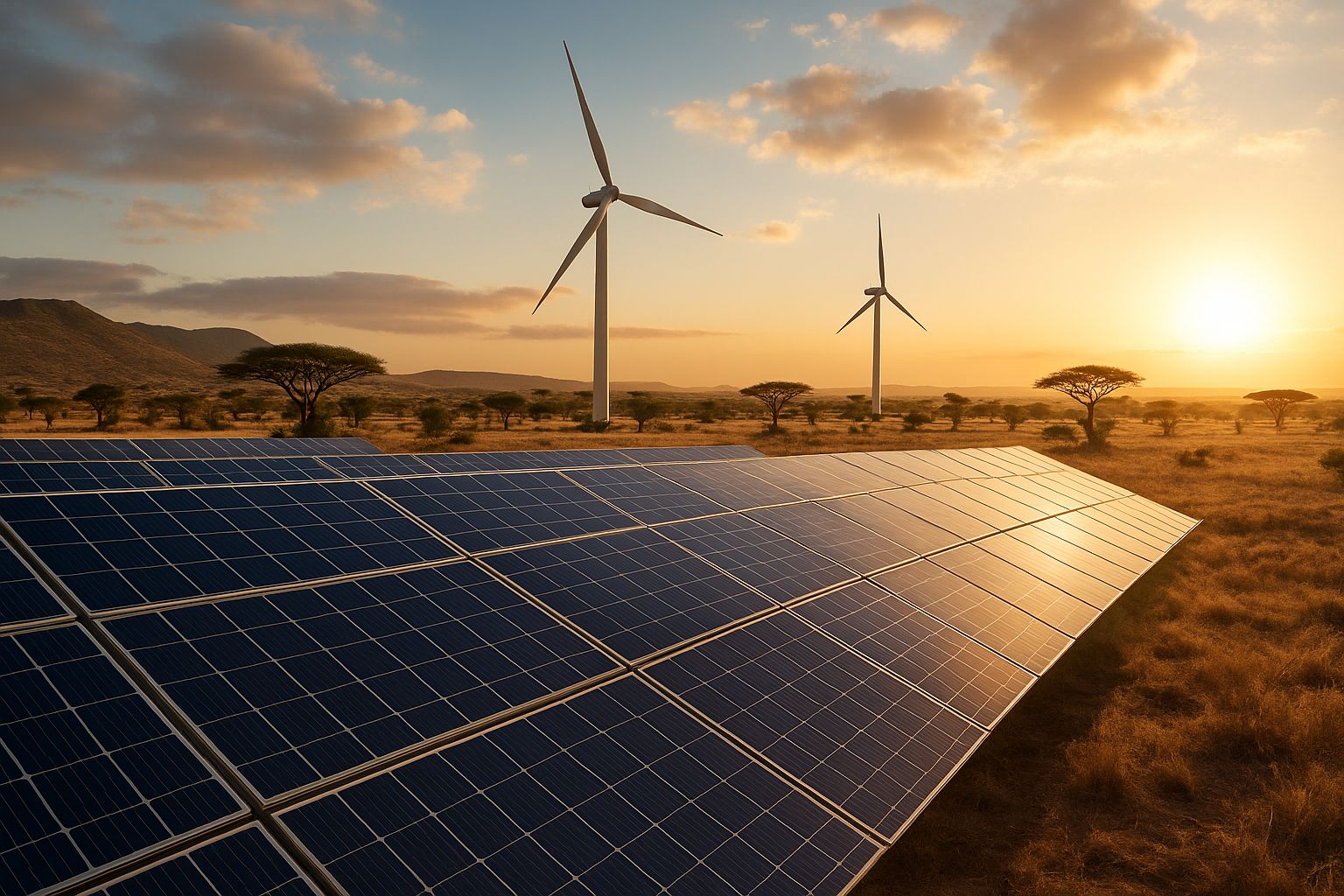
1. Solar Farms – Expanding large-scale solar fields in sunny regions such as the Northern Cape, capable of generating gigawatts of clean electricity.
2. Wind Turbines – Leveraging coastal regions like the Eastern Cape and Western Cape, where strong winds can power turbines year-round.
3. Hydroelectric Stations – Developing partnerships with neighboring countries, including Mozambique and Lesotho, to tap into regional hydropower potential.
This multi-pronged approach reflects a commitment to diversification — reducing reliance on coal while ensuring energy security for industries and communities.
International Partnerships: Germany and China
Germany, a global leader in renewable energy, is providing technical expertise, particularly in grid integration and solar technology. China, the world’s largest producer of solar panels and turbines, is contributing financing and equipment to fast-track implementation.
These partnerships highlight South Africa’s global significance: foreign governments recognize that stabilizing South Africa’s energy sector is vital for regional stability and trade.
The Promise of Job Creation
Beyond addressing shortages, the projects are expected to create tens of thousands of jobs. From construction of solar farms to long-term maintenance of turbines, the renewable energy sector could provide opportunities for skilled workers, engineers, and young graduates entering the job market.
The government has pledged to prioritize local hiring, with training programs designed to equip South Africans with the skills needed for this green transition.
Environmental Benefits
Coal currently accounts for more than 80% of South Africa’s electricity generation, making the country one of the world’s top 15 carbon emitters. The pivot to renewables could significantly lower emissions, helping South Africa meet its commitments under the Paris Climate Agreement.
Environmental activists have long argued that the country’s reliance on coal is unsustainable, both environmentally and economically. The new projects could mark a turning point in balancing energy security with ecological responsibility.
Challenges Ahead
Despite the optimism, significant hurdles remain:
– Grid Reliability: South Africa’s power grid is outdated and will require upgrades to handle intermittent renewable sources.
– Financing Risks: Although $2 billion has been pledged, more investment will be needed for long-term stability.
– Eskom’s Role: As the central utility, Eskom’s internal challenges — from corruption to inefficiency — could undermine progress.
– Public Trust: Many South Africans remain skeptical, having seen numerous energy promises fail in the past.
Experts caution that transparency, accountability, and strong governance will be critical to turning plans into reality.
Regional and Continental Significance
South Africa’s renewable energy push carries implications far beyond its borders. As one of Africa’s largest economies, its success or failure will set a precedent for other nations.
Already, countries such as Kenya, Morocco, and Egypt have launched ambitious renewable energy programs. South Africa’s entry into this league of leaders could accelerate continental momentum, positioning Africa as a global hub for clean energy innovation.
The African Development Bank has expressed optimism that South Africa’s renewable projects will inspire cross-border collaboration, particularly in regional power-sharing agreements.
The Chrome News Perspective
At Chrome News, we view South Africa’s renewable energy shift as a watershed moment for the continent. The struggle with load shedding has long symbolized the gap between Africa’s potential and its realities. This $2 billion investment is not merely about kilowatts and turbines — it is about restoring confidence, protecting livelihoods, and ensuring that Africa writes its own future in energy.
South Africa’s success could prove that renewable energy is not just a Western solution but a powerful African one. By building locally, employing its citizens, and leveraging international expertise, South Africa is showing that resilience and innovation can emerge from crisis.
The stakes are high: if these projects succeed, the nation could become a model for balancing industrial growth, environmental responsibility, and energy independence. If they fail, South Africa risks deeper economic instability.
Conclusion
South Africa’s renewable energy projects represent hope in a time of uncertainty. They offer the potential to cut load shedding by nearly half within five years, create thousands of jobs, and lower the country’s carbon footprint.
For households and businesses long battered by outages, the promise of reliable electricity is nothing short of transformative. For Africa as a whole, it is a reminder that the continent can lead in renewable energy — not as followers, but as pioneers.
As the first solar panels are installed and the first turbines rise against South Africa’s landscapes, the message is clear: the age of coal is ending, and the future is renewable.