






Ethiopia Launches New Airline Routes to West Africa

Introduction
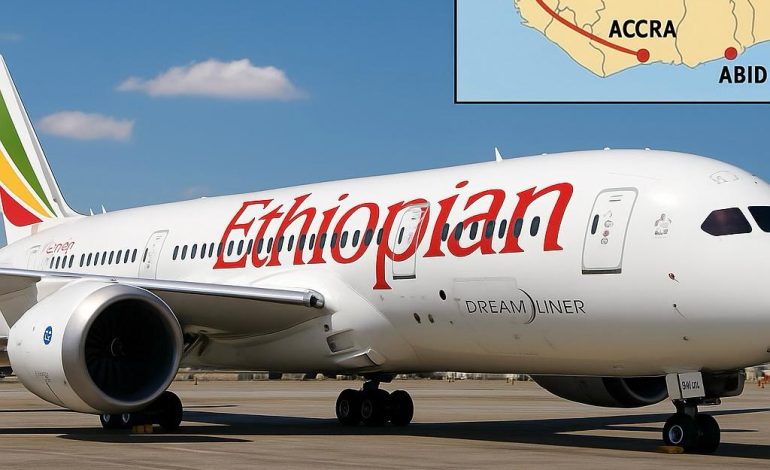
Ethiopia’s aviation sector, long celebrated as a continental leader, has taken another bold step by unveiling new airline routes connecting Addis Ababa to key West African cities. The move by Ethiopian Airlines is not just a milestone for the national carrier but a statement about Africa’s ambition to strengthen intra-African connectivity and position itself as a hub in global aviation.
With flights now reaching Lagos (Nigeria), Accra (Ghana), and Abidjan (Côte d’Ivoire), Ethiopia is reinforcing its reputation as the “gateway of Africa.” For West Africa, where limited direct connections have long stifled trade and tourism, the expansion is a lifeline that promises to reduce travel times, open markets, and foster stronger cultural exchange.
Why This Matters for Africa
Air travel is often considered the backbone of modern economic integration. Yet Africa has historically suffered from limited intra-continental routes, forcing travelers to transit through Europe or the Middle East to move between African capitals. By opening new routes into West Africa, Ethiopian Airlines is challenging that dynamic.
– Trade Growth: Business leaders anticipate a direct boost in trade volumes between East and West Africa, particularly in sectors such as textiles, agriculture, and manufacturing.
– Tourism Expansion: Direct flights make it easier for tourists to explore Africa’s vast diversity, from the historic castles of Ghana to Ethiopia’s rock-hewn churches.
– Pan-African Identity: Easier travel fosters cultural exchange and strengthens African unity under the African Union’s long-term integration goals.
The Business Angle
Ethiopian Airlines has consistently been Africa’s most profitable and fastest-growing carrier. Industry analysts note that the decision to expand further into West Africa is not only a strategic move but also a necessary response to growing competition from Middle Eastern carriers like Emirates and Qatar Airways.
The airline’s CEO highlighted that West Africa accounts for a significant share of Africa’s population and GDP, making it a natural choice for expansion. By investing in these routes, Ethiopia is positioning itself to capture both passenger and cargo traffic — particularly important for time-sensitive exports like flowers, coffee, and fresh produce.
Infrastructure and Partnerships
For such an ambitious expansion to succeed, infrastructure is key. Ethiopian Airlines is leveraging:
– Addis Ababa Bole International Airport, recently upgraded to handle up to 22 million passengers annually.
– Partnerships with African carriers such as Asky Airlines in Togo, enabling feeder connections deeper into West Africa.
– Cargo hubs in Lagos and Accra that can support supply chains for SMEs across the region.
This infrastructure-first approach signals Ethiopia’s recognition that air routes are only as strong as the logistical systems that support them.
Reactions from West Africa
The response from West African governments and business communities has been overwhelmingly positive.
– Nigeria’s aviation authority welcomed the move, citing it as a step toward improving Lagos’s role as a regional commercial hub.
– Ghana’s tourism board sees the routes as critical for boosting visitor numbers ahead of major cultural festivals such as Afrochella.
– Ivory Coast’s exporters believe direct air cargo flights to Addis will unlock new markets in East Africa and Asia.
Yet, some critics argue that reliance on Ethiopian Airlines exposes West African aviation to dominance by a non-West African carrier, raising questions about regional balance.
Challenges Ahead
While the expansion is promising, it comes with challenges:
1. Cost of Air Travel: Air tickets within Africa remain among the most expensive in the world relative to income levels. Unless prices become more competitive, only a small middle class will benefit.
2. Regulatory Hurdles: Airspace agreements, safety standards, and visa restrictions still create friction for seamless travel.
3. Infrastructure Gaps: Many West African airports lack modern facilities to fully support increased passenger and cargo volumes.
These hurdles underline the importance of policy alignment under the African Continental Free Trade Area (AfCFTA) and the Single African Air Transport Market (SAATM).
Diaspora and Global Relevance
The impact of this expansion is not limited to Africa. The African diaspora in the U.S. and Europe — particularly Nigerians and Ghanaians — stand to benefit from shorter and more flexible travel routes when visiting home. Instead of routing through Dubai, London, or Paris, they now have intra-African options that reduce travel fatigue and cost.
Moreover, global investors are watching closely. Ethiopia’s move positions Africa as a more self-reliant aviation market, less dependent on foreign hubs. For international trade, this means quicker cargo shipments, more reliable supply chains, and increased investor confidence in Africa’s logistics landscape.
Chrome Perspective
At Chrome News, we see Ethiopia’s new West Africa routes as more than aviation news — they are symbolic of Africa’s determination to build bridges across regions. Every flight from Addis Ababa to Lagos or Accra is a reminder that Africa’s future lies in intra-African cooperation, not dependence on external gateways.
The routes should not only be celebrated but also supported through policy reform, regional investment, and public-private partnerships. If other African nations replicate this model, the dream of a connected Africa — economically, socially, and culturally — will be realized.
Conclusion
The launch of Ethiopian Airlines’ new routes to West Africa is a milestone that goes beyond aviation. It is about the future of African integration, the competitiveness of African economies, and the pride of Africans traveling within their own continent.
Challenges remain, but the vision is clear: a connected Africa, flying on its own wings.